
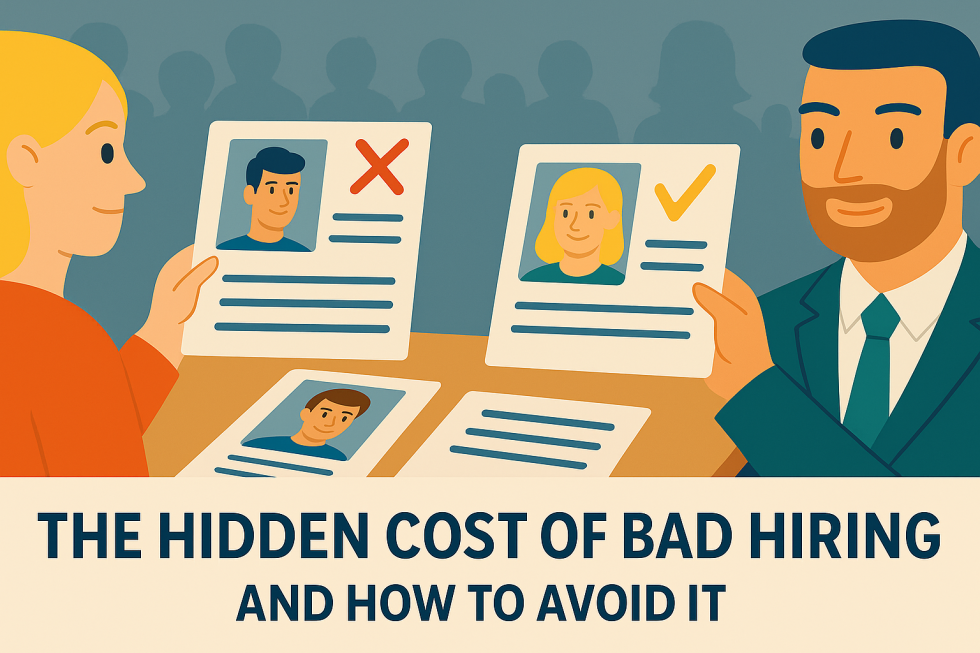
Hiring is one of the most important decisions a business leader makes. The right person can elevate a team, accelerate growth, and strengthen company culture. The wrong person can do the opposite — dragging down performance, creating unnecessary conflict, and even damaging client relationships.
What many leaders underestimate is just how costly a bad hire can be. The U.S. Department of Labor estimates the price of a poor hiring decision is at least 30% of the employee’s first-year earnings. But in practice, the impact often reaches far beyond dollars and cents. Let’s explore why mis-hires happen, what they cost, and how to avoid them.
The True Cost of a Bad Hire
1. Financial Losses
The most obvious cost is financial. Recruiting expenses, onboarding, and training all add up. When an employee doesn’t last, the company must pay for the same process again to fill the role. Add to that the potential severance costs and wasted payroll, and the financial hit is significant.
2. Lost Productivity
A bad hire doesn’t just fail to perform — they often pull others down with them. Colleagues may spend time fixing mistakes, redoing work, or covering tasks that should have been handled by the new employee. Managers also lose valuable time coaching or correcting instead of focusing on strategic priorities.
3. Cultural Damage
Perhaps the most dangerous impact of a mis-hire is the effect on company culture. If a new employee is negative, unmotivated, or simply not a good fit, morale can drop quickly. Other employees may start questioning leadership’s judgment, and in competitive industries, high performers may even leave to find stronger teams.
4. Reputation Risks
In customer-facing roles, a bad hire can directly harm a company’s reputation. Missed deadlines, poor service, or unprofessional interactions can damage relationships that took years to build. Clients rarely differentiate between “the wrong person” and the company itself — they see one brand, one experience.
Why Mis-Hires Happen
Even the most seasoned leaders can make hiring mistakes. Common pitfalls include:
-
Rushing the process. When a position is vacant, pressure builds to fill it quickly. Speed often trumps thoroughness, and critical vetting steps are skipped.
-
Focusing only on technical skills. While qualifications matter, overlooking communication, adaptability, or cultural fit is one of the biggest hiring traps.
-
Bias in decision-making. Leaders sometimes hire people who “feel” like a fit because they share a background or personality style, even if the objective requirements aren’t met.
-
Inconsistent interviews. Without structured questions, it’s difficult to compare candidates fairly, and gut feelings can outweigh facts.
-
Ignoring reference checks. Past performance is often the best predictor of future success. When reference checks are skipped or rushed, red flags are missed.
How to Avoid a Bad Hire
The good news is that leaders can significantly reduce the risk of hiring mistakes by implementing better processes.
1. Define Success Clearly
Instead of focusing only on a job description, ask: What will success in this role look like after 6 months? After a year? The clearer the expectations, the easier it is to spot candidates who align.
2. Use Structured Interviews
A consistent set of questions not only makes evaluation fairer but also removes some of the bias that creeps into casual conversations. Questions should test both technical skills and problem-solving approaches.
3. Assess Cultural Fit — and Add
Cultural fit matters, but so does “culture add.” Ask: Will this person bring something new that strengthens our team? Look for candidates who align with company values but also challenge the team to grow.
4. Involve Multiple Voices
One interviewer may miss what another sees. Involving team members in the process not only provides a fuller picture but also gives candidates a chance to see if they’d enjoy working with the group.
5. Prioritize Reference Checks
References are not just a formality. Done well, they offer insights into a candidate’s work ethic, reliability, and ability to collaborate. Ask specific questions: How did they handle pressure? What role did they play on the team?
6. Partner with Experts
Sometimes, internal teams simply don’t have the time or tools to do thorough vetting. This is where recruitment firms and consultants add value. With established networks, assessment tools, and experience in reading between the lines, experts can prevent costly mistakes.
Turning Hiring Into a Strategic Investment
When leaders view hiring as a transactional process, mistakes are inevitable. But when hiring is seen as a strategic investment, the approach changes. Time is spent not only on evaluating candidates but also on refining job roles, clarifying goals, and building strong onboarding processes.
Avoiding even a single bad hire can save thousands of dollars and countless hours of frustration. More importantly, making the right hire builds momentum — teams grow stronger, clients notice the difference, and leaders earn trust.
The lesson is simple: hiring isn’t about filling a seat quickly. It’s about building the future of your business, one person at a time.
Share on:
0 Comments